
Strep throat is a bacterial infection caused by Group A Streptococcus bacteria. It mainly affects the throat and tonsils and can spread easily through respiratory droplets, close contact, or shared utensils. Although some symptoms may resemble a common cold, strep throat often develops suddenly and may require antibiotic treatment.
Recognising common strep throat symptoms can help you decide when to seek medical advice. However, symptoms alone cannot confirm the infection. A healthcare professional may need to perform a rapid strep test or throat culture before recommending treatment.
1. Severe, Sudden Sore Throat
One of the most recognisable strep throat symptoms is a sudden, intense sore throat. The pain may begin quickly and can become especially uncomfortable when swallowing food, drinks, or even saliva. Some people describe the throat as feeling raw, scratchy, or sharply painful.
Unlike many viral sore throats, strep throat often occurs without typical cold symptoms. You may not have a runny nose, sneezing, or a cough. This does not mean every sore throat without cold symptoms is strep, but the absence of congestion combined with sudden throat pain may be a reason to contact a healthcare professional.
Children may complain that swallowing hurts or may avoid eating and drinking because of the discomfort. Adults can also experience difficulty speaking normally because the throat feels swollen and irritated.

2. Fever That Develops Quickly
A fever is another common sign of strep throat. A temperature of 101°F (38.3°C) or higher may develop, sometimes within a short period. The fever may occur alongside chills, sweating, fatigue, or a general feeling of illness.
Strep-related fever can appear quickly, particularly during the early stages of infection. Some people notice that their throat pain and fever begin on the same day. Others develop a fever after the sore throat has already started.
Although fever is common with strep throat, not everyone experiences it. A person can still have a bacterial throat infection without a high temperature, especially during the early stages. For that reason, fever should be considered along with other symptoms rather than used as the only way to identify strep throat.
If you are checking your temperature, use a reliable thermometer and follow the device instructions. It is also important to drink plenty of fluids, since fever can increase the risk of dehydration.
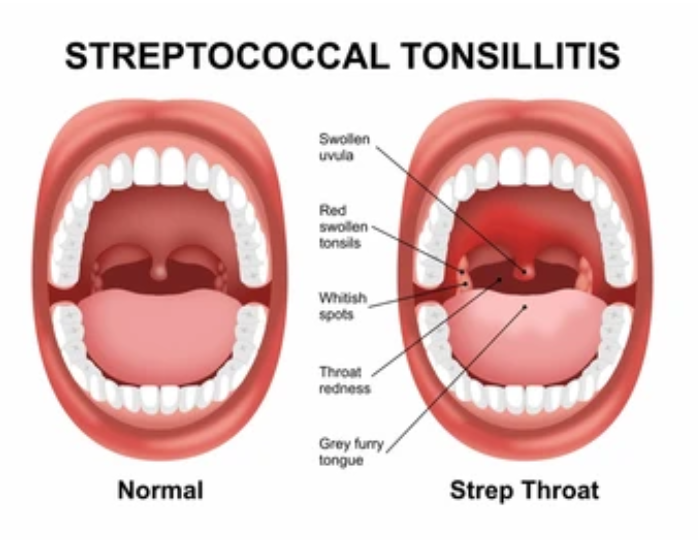
3. Red and Swollen Tonsils
When strep bacteria infect the throat, the tonsils may become visibly red, swollen, and inflamed. Looking at the back of the throat may reveal enlarged tonsils or a deep red appearance around the throat tissues.
White patches, small spots, or streaks of pus may also appear on the tonsils. These markings can be associated with strep throat, but they are not exclusive to it. Certain viral infections and other throat conditions may produce similar changes.
Swollen tonsils can make swallowing more painful and may cause a sensation of tightness in the throat. Children may have trouble eating solid foods, while adults may prefer soft foods and cool or warm drinks for comfort.
Avoid scraping or removing white patches from the tonsils. Doing so can irritate the tissue and may cause bleeding. Instead, contact a medical professional if you notice significant swelling, pus-like spots, or worsening throat pain. Testing is the most reliable way to determine whether group A Streptococcus is present.
4. Tender, Swollen Lymph Nodes
Swollen lymph nodes in the neck are another possible sign of strep throat. These small, bean-shaped structures are part of the immune system. They help filter harmful substances and support the body’s response to infection.
When your immune system reacts to bacteria in the throat, the lymph nodes beneath the jaw or along the sides of the neck may become enlarged and tender. You might notice small, painful lumps when touching the area or turning your head.
Tender neck glands often occur together with a sore throat and fever. However, swollen lymph nodes can also develop with colds, influenza, mononucleosis, and other infections. Their presence does not confirm strep throat, but it can add to the overall pattern of symptoms.
Avoid repeatedly pressing or massaging swollen lymph nodes, as this may make the area more uncomfortable. They often improve as the underlying infection gets better. If swelling persists, continues to enlarge, or is accompanied by unusual symptoms, seek medical guidance.
5. Headache, Fatigue, or Body Aches
Strep throat may affect more than the throat. Some people develop a headache, fatigue, chills, or general body aches along with fever and painful swallowing. These symptoms can make it difficult to concentrate, work, attend school, or carry out normal activities.
Children may appear unusually tired, irritable, or less interested in eating. Some may also experience stomach pain, nausea, or vomiting, although these symptoms are more common in children than adults. A rash can occasionally occur with a strep infection; when it does, the condition may be called scarlet fever and requires medical evaluation.
Body aches and tiredness are not specific to strep throat. They can occur with several viral illnesses, including influenza and COVID-19. That is why a physical exam and appropriate testing matter when symptoms strongly suggest a bacterial throat infection.
When to Seek Medical Care
If you have a sudden severe sore throat, fever, swollen tonsils, tender neck lymph nodes, or white patches, contact a healthcare professional for advice and testing. A rapid strep test may provide results quickly, while a throat culture may be used when additional confirmation is needed.
Do not take leftover antibiotics or someone else’s prescription. Antibiotics are useful for bacterial infections but do not treat viruses. Taking the wrong medication can cause side effects and contribute to antibiotic resistance. If strep throat is confirmed, follow the prescribed treatment exactly and complete the full course unless your healthcare professional tells you otherwise.
Seek urgent medical care if you have trouble breathing, severe dehydration, drooling, an inability to swallow liquids, rapidly worsening throat swelling, confusion, or extreme weakness. These symptoms may indicate a more serious problem. Medical attention is also important if a child refuses all fluids, urinates very little, or appears unusually sleepy.
Strep throat symptoms can overlap with other illnesses, so self-diagnosis is not always reliable. Prompt evaluation can help determine the cause, guide appropriate treatment, reduce the risk of complications, and limit the spread of infection.